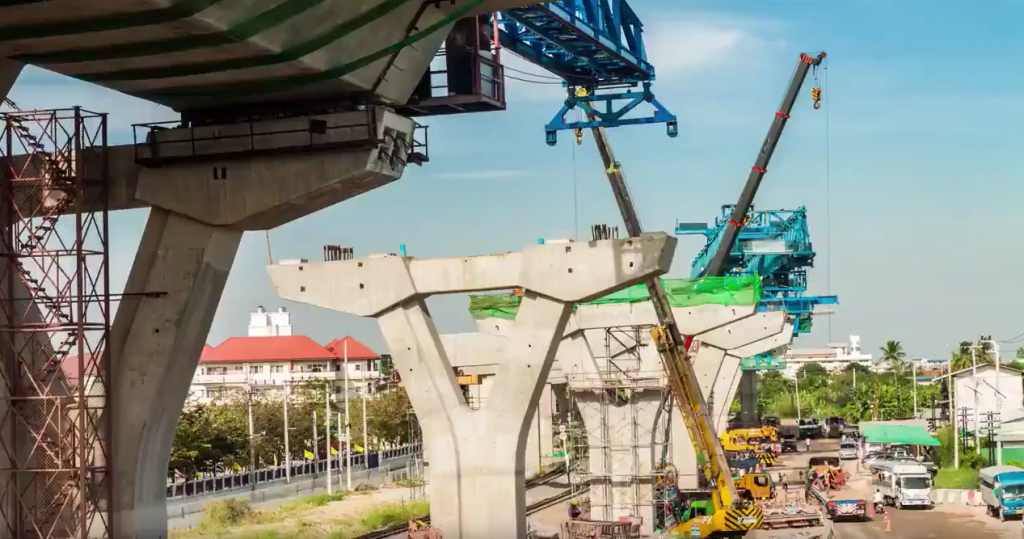
High-Speed Economic Growth for Texas and the Nation
Texas Central’s high-speed train project will have a substantial and long-lasting positive impact on the state’s economy. This unprecedented private investment will spur economic development, create tens of thousands of jobs and infuse tax revenue into the state and local communities.

Cars, trucks, 18-wheelers and motorcycles crowd Interstate 45 between Houston and North Texas, with travel times often approaching and sometimes exceeding five hours, depending on road and weather conditions. The Texas Department of Transportation estimates that this trek could take upwards of 6.5 hours by 2035. Similarly, a 2010 study of intercity travel in Texas estimated that the average travel speeds of approximately 60 mph along the I-45 corridor would drop almost 35 percent to 40 mph – making for a 6.5-hour drive between North Texas and Houston. This increase in travel time includes all planned improvements and increased highway capacity.
Passengers on the high-speed train system will leave traffic jams, construction delays and flat tires behind as they zip effortlessly between the two regions. A more pleasant and productive experience will be an oasis for business and leisure travelers alike. And for those who continue to drive, more passengers on the train means fewer people in front of you on the highway. It’s a win-win for Texans and it’s going to be here before you know it.

The N700 train consumes 1/8th less energy per seat and expends 1/12th carbon dioxide than a Boeing B777-200*. The Series N700 was designed and has continuously evolved to operate in some of Japan’s most dense urban environments; it embodies decades of applied research, making it one of the quietest trains in the world.
*Data based on Tokyo-Osaka line
Although a private-sector project, government agencies will play an important role in certifying the technology, reviewing the project’s environmental impacts, coordination during the project’s construction and regulating the system’s operations.
High-Speed, Low-Impact:
Committed to Safety
High-speed trains are the safest way to travel between cities. In fact, millions of passengers ride high-speed trains every day across Europe and Asia. During more than 54 years of high-speed train operation on Japan’s Tokaido Shinkansen system, there have been no fatalities or injuries due to train accidents, because of the system’s thoughtful design, rigorous maintenance and sophisticated, safety-first operating procedures.
To learn from that long experience, we have consulted with global leaders in the high-speed train industry to ensure that the latest technologies and highest standards for safety are brought to Texas.
- We are working closely with JRC in the technological field, the premier operator of world-class high-speed passenger rail, including Japan’s Tokaido Shinkansen. JRC has turned high-speed rail operation into an exact science.
- Texas Central is committed to a 100% safety performance standard. JRC’s more than 50-year record of safe high-speed rail operations is unrivaled globally, and we will insist on nothing less here in Texas.
- JRC intends to provide long-term and continuous technical support for the project in Texas. While JRC is not a financial investor in the project, Texas Central will have the benefit from JRC’s technical support backed up with its experience and HSR know-how at every phase of the project’s design, construction, and operation.
Our commitment to safety permeates every aspect of the train system’s design, and an expertly designed and executed operation and maintenance regimen, based on the highly successful and safe Japanese model including:
Seamlessly integrates signaling, infrastructure design, track work, communications, power supply, operations, maintenance, rolling stock and the system safety plan into a coherent whole;
A track system completely separated from other modes of transportation and dedicated solely to high-speed passenger rail service, preventing any possible encounter with freight traffic, motor vehicles or pedestrians
JRC’s state-of-the-art and proprietary Automatic Train Control (ATC) signaling technology, which will provide equivalent or even better safety levels than those in use in the U.S. today